Sukhvir Sanghal and the Allahabad School of Arts During World War II
The Forces Art Exhibition of 1944 and a forgotten chapter of cultural exchange in wartime India.
The history of Indian art during the Second World War remains one of the least explored chapters in the cultural history of modern India. While the period is often studied through the lens of political change, nationalism and global conflict, artistic institutions across the country continued to function as centres of creativity, education and cultural exchange.
Among these institutions was the Allahabad School of Arts, founded in 1938 by Prof. Sukhvir Sanghal. Located at 16A Canning Road, Allahabad, the School emerged as an important centre for artistic education during a period of profound historical transformation.
The Allahabad School of Arts
Established in 1938, the Allahabad School of Arts reflected Sanghal's conviction that artistic education should be rooted in Indian cultural traditions while remaining open to creative exchange. The institution provided instruction in painting, drawing and design and quickly developed into an important centre of cultural activity in Allahabad.
The School would later evolve into Kala Bharti, which became one of North India's most significant institutions dedicated to art, music, dance and cultural education.
The Forces Art Exhibition, October 1944
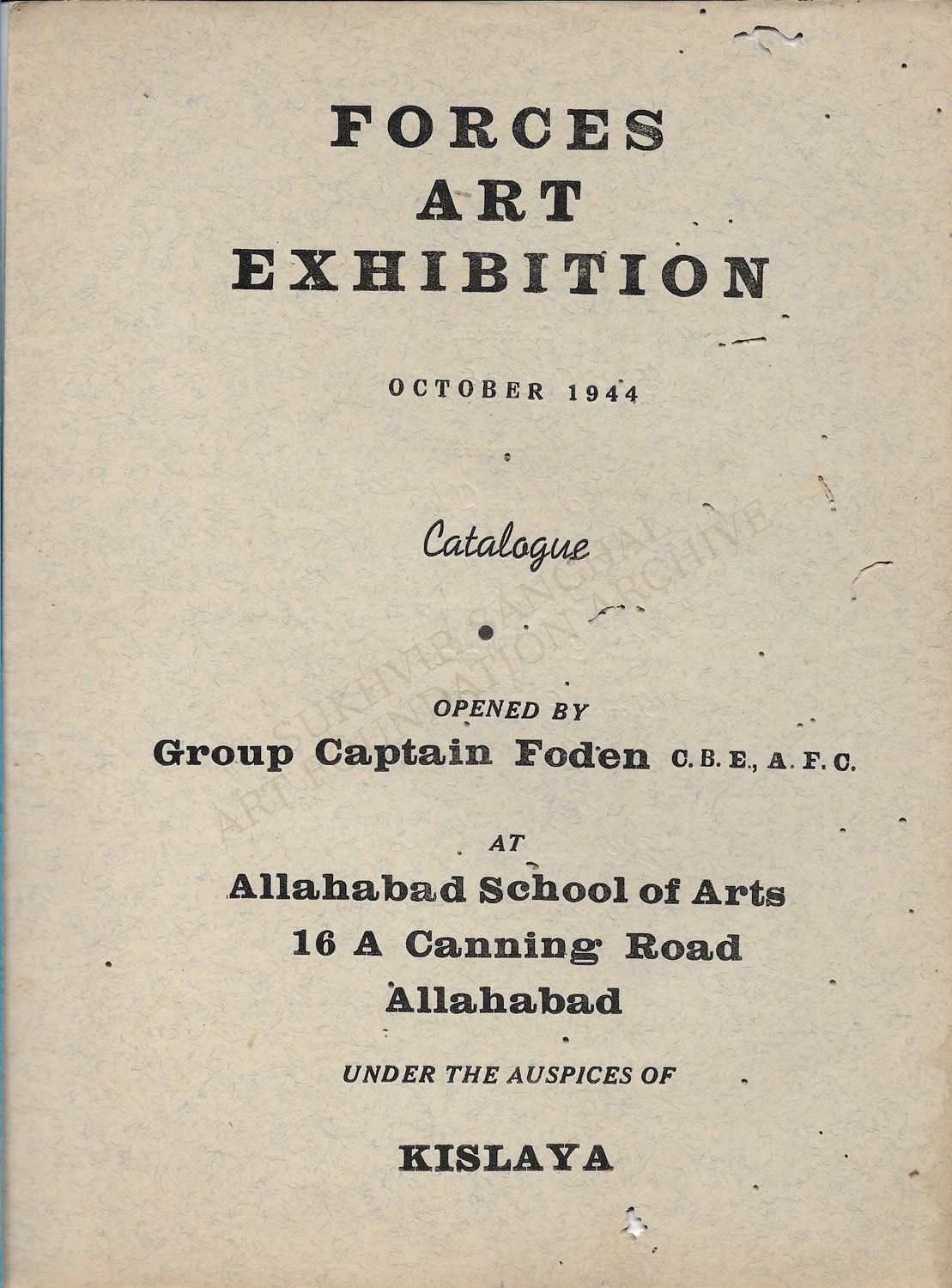
One of the most significant surviving records from this period is the catalogue of the Forces Art Exhibition, held in October 1944 at the Allahabad School of Arts.
Opened by Group Captain Foden, C.B.E., A.F.C., a senior and decorated officer of the Royal Air Force, the exhibition brought together artists serving with Allied military forces stationed in India during the Second World War.
What Group Captain Foden Said at the Forces Art Exhibition
Speaking at the opening of the Forces Art Exhibition at the Allahabad School of Arts, Group Captain Foden described art exhibitions as an important means of creating understanding and fellowship between the East and the West.
He observed that even during times of war, artists continued to produce significant work, and praised their dedication in pursuing creative expression under difficult circumstances.
"When one half of the world was trying to destroy the other half, such cultural activities should be given every possible encouragement."
His remarks reflected the belief that art could serve as a bridge between people and cultures, offering a space for dialogue, understanding, and shared humanity during a period marked by global conflict.
Organised under the auspices of Kislaya and hosted at the Allahabad School of Arts, the exhibition featured nearly two hundred works by members of the Royal Air Force and Army units serving across the subcontinent.
The Organising Committee and V. P. Singh
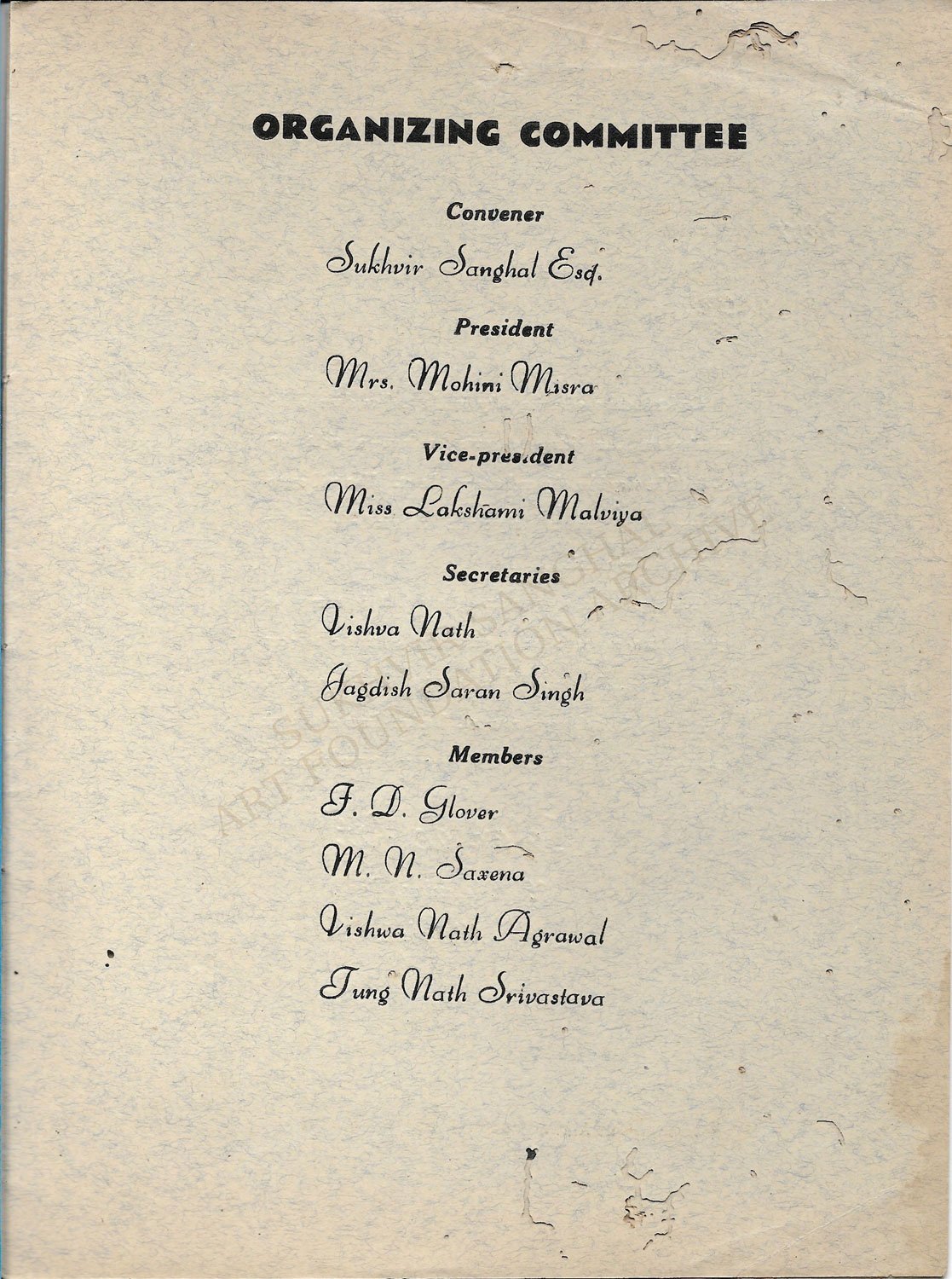
The catalogue provides a valuable glimpse into the cultural networks surrounding the Allahabad School of Arts during the 1940s. The Organising Committee included students, artists, educators and public figures associated with the institution.
Among the committee members listed in the catalogue is Shri V. P. Singh, who would later serve as Prime Minister of India. His participation demonstrates his early involvement with the artistic and cultural environment fostered by Prof. Sanghal.
The presence of V. P. Singh within the organisational structure of the exhibition illustrates the broader influence of the Allahabad School of Arts beyond the field of art and reflects its role as an important centre of intellectual and cultural activity in Allahabad.
A Meeting Ground Between East and West
“It at once makes available to us a convenient meeting ground for the Indian and the Western Art.”
In his introduction to the catalogue, Sanghal articulated a vision that extended beyond the exhibition itself. He regarded art as a means of fostering understanding between cultures and peoples during a period of global conflict.
Rather than viewing artistic traditions as isolated systems, he sought opportunities for dialogue, exchange and mutual learning.
Teaching Indian Art to Allied Artists
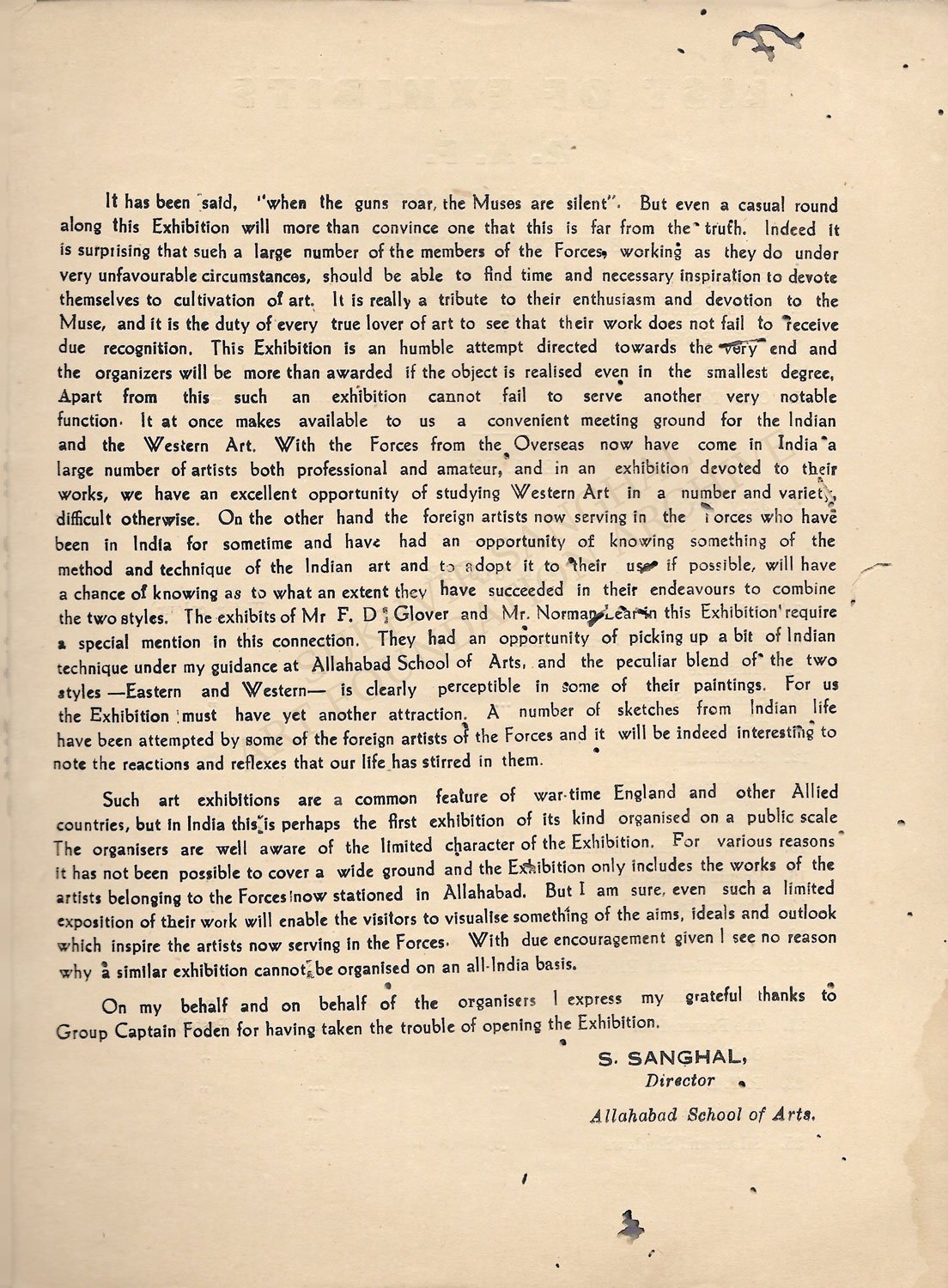
“Mr. F. D. Glover and Mr. Norman Lear had an opportunity of picking up a bit of Indian technique under my guidance at Allahabad School of Arts.”
This statement provides rare documentary evidence of artistic exchange taking place within the School during the war years. It demonstrates that Sanghal's influence extended beyond Indian students and that the institution functioned as a place where artists from different cultural backgrounds could learn from one another.
Sanghal further noted that traces of Indian artistic methods could be observed in the work of these artists, producing a distinctive synthesis of Eastern and Western approaches.
Artistic Life in Wartime India
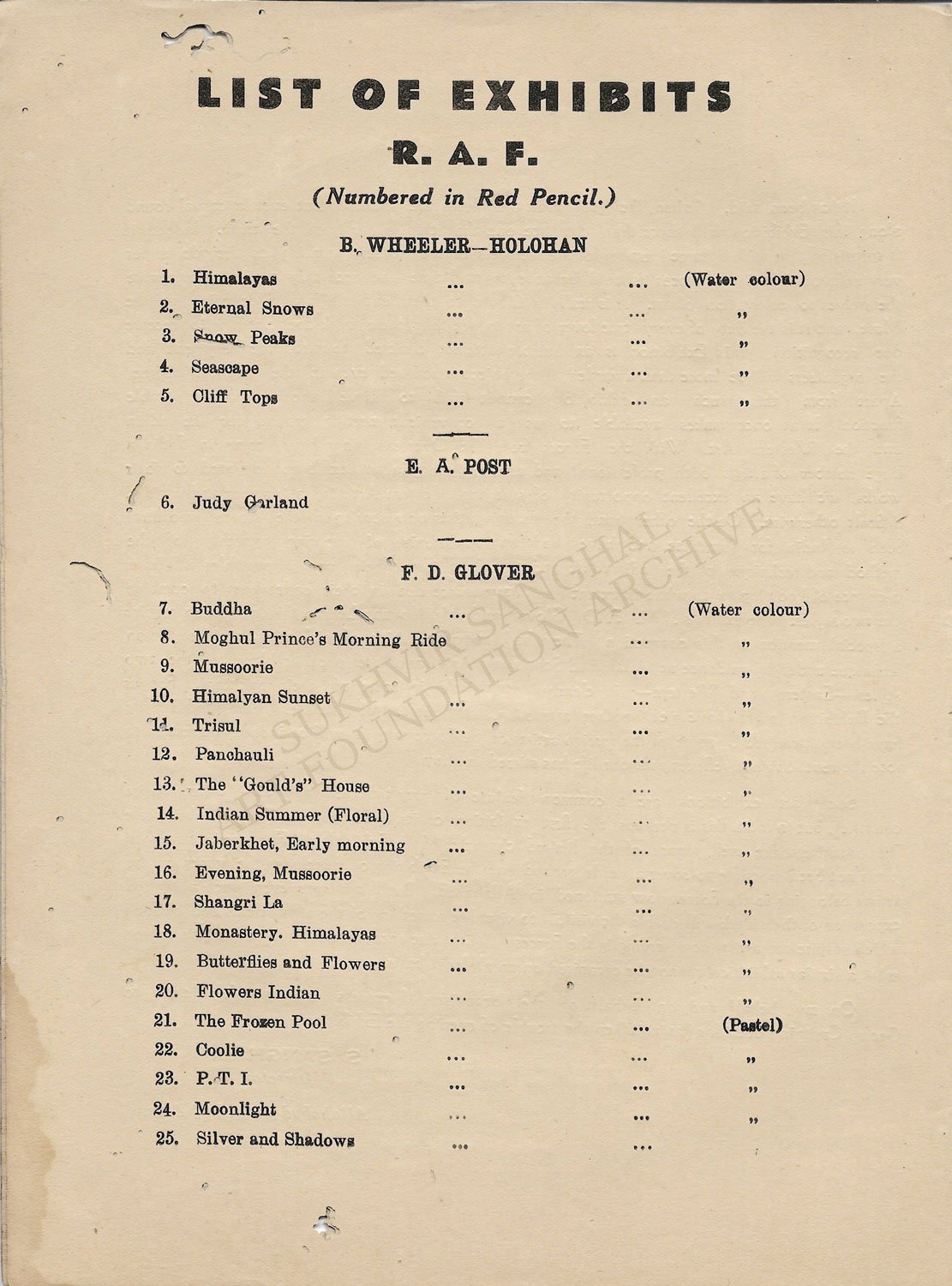
The exhibition catalogue records a remarkable range of subjects including Indian villages, temples, Himalayan landscapes, portraits and scenes of everyday life in wartime India.
Together these works provide a visual record of India as experienced by artists serving with Allied forces during the Second World War.
Legacy
Today, the Forces Art Exhibition catalogue survives as an important primary source documenting a largely forgotten chapter of Indian art history.
It reveals the Allahabad School of Arts as a dynamic institution where artistic education, cultural exchange and public engagement flourished despite the challenges of wartime.
More importantly, it presents Prof. Sukhvir Sanghal not only as an artist but also as an educator, organiser, mentor and cultural ambassador whose efforts helped create meaningful connections between Indian and international artistic traditions.
Research & Compilation
Priyam Chandra
Archival Source
View Archival Record →