The Wash Paintings of Prof. Sukhvir Sanghal
Tradition, Rasa and an Indian Visual Language
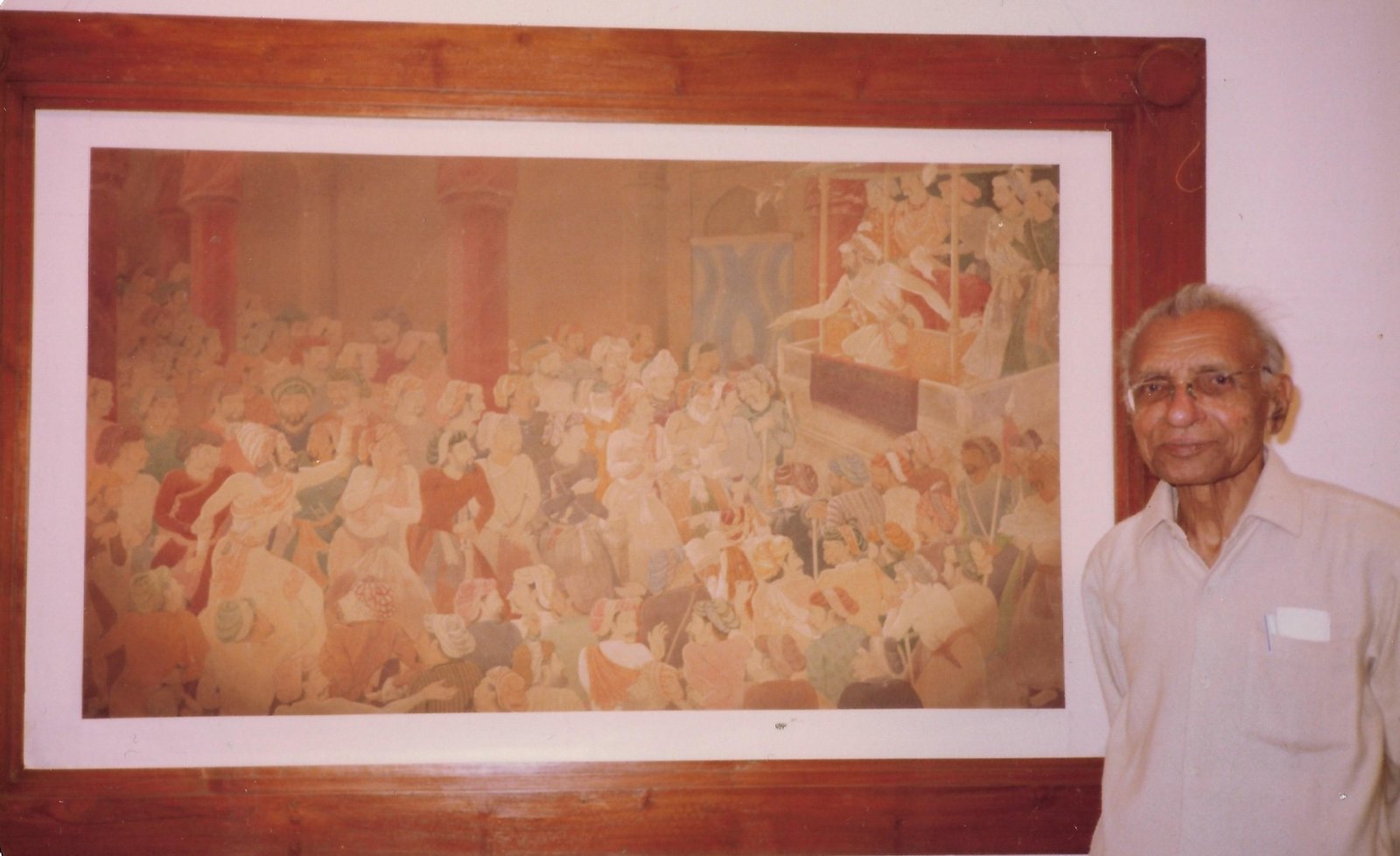
Shivaji in the Court of Aurangzeb
Wash painting · Collection of Prof. Sukhvir Sanghal
Prof. Sukhvir Sanghal (1914–2006) occupies a distinctive position in the history of modern Indian painting. His artistic practice developed within the broader intellectual and artistic environment associated with the Bengal School, yet his work cannot be understood simply as an extension of that movement.
For Sanghal, wash painting was more than a technique of applying diluted colour. It became a means through which Indian aesthetic thought, emotion, spirituality and human experience could be translated into visual form.
Central to his artistic thinking was the Indian aesthetic concept of rasa—the emotional and aesthetic experience evoked through art. His paintings use translucent colour, controlled tonal transitions, expressive line and complex forms to create an emotional atmosphere.
The Bengal School and the Revival of Indian Painting
The emergence of the Bengal School in the late nineteenth and early twentieth centuries represented an important turning point in modern Indian art.
In response to the dominance of European academic realism within colonial art education, artists associated with the movement sought inspiration from India's artistic heritage, including Ajanta, Mughal and Rajput painting, Indian mythology and indigenous aesthetic traditions.
The wash technique became particularly suited to this artistic philosophy. Diluted colour, soft tonal transitions and atmospheric effects allowed artists to leave space for the viewer's own interpretation.
Sanghal's artistic development took place within this larger intellectual lineage. His association with the Bengal School was strengthened through his relationship with artists and teachers of that tradition, including Abanindranath Tagore and A. K. Haldar.
"Just like food eaten in small quantities is easily digested and gives life energy to the body, similarly, the benefit of applying transparent colours is that the colours mix with each other well and make the painting durable by becoming an integral part of the paper."
— Prof. Sukhvir Sanghal
From Influence to Individual Expression
Although the Bengal School provided an important foundation, Sanghal developed an individual visual language.
His work brought together elements from Indian artistic traditions with his own observations and original ideas. His artistic vocabulary drew upon traditions associated with Ajanta, Mughal painting, the Bengal School and Indian aesthetic thought, while also incorporating his own approach to composition, colour and emotional expression.
His wash paintings can therefore be understood as a process of inheritance, adaptation and individual reinterpretation.
Beyond Technique: The Idea of Rasa
The significance of Sanghal's wash painting lies not only in its technique but also in the philosophy behind it.
His interest in rasa provides an important framework for understanding his work. In Indian aesthetic thought, rasa concerns the emotional and aesthetic experience generated through artistic expression.
Sanghal's paintings frequently explore emotions such as love, devotion, longing, sacrifice, dignity, spirituality and contemplation.
The subject therefore becomes more than a narrative event. A mythological or historical scene can become an exploration of an emotional state.
His paintings do not necessarily instruct the viewer what to feel. Instead, composition, colour, gesture and atmosphere work together to create the conditions through which an emotional response can arise.
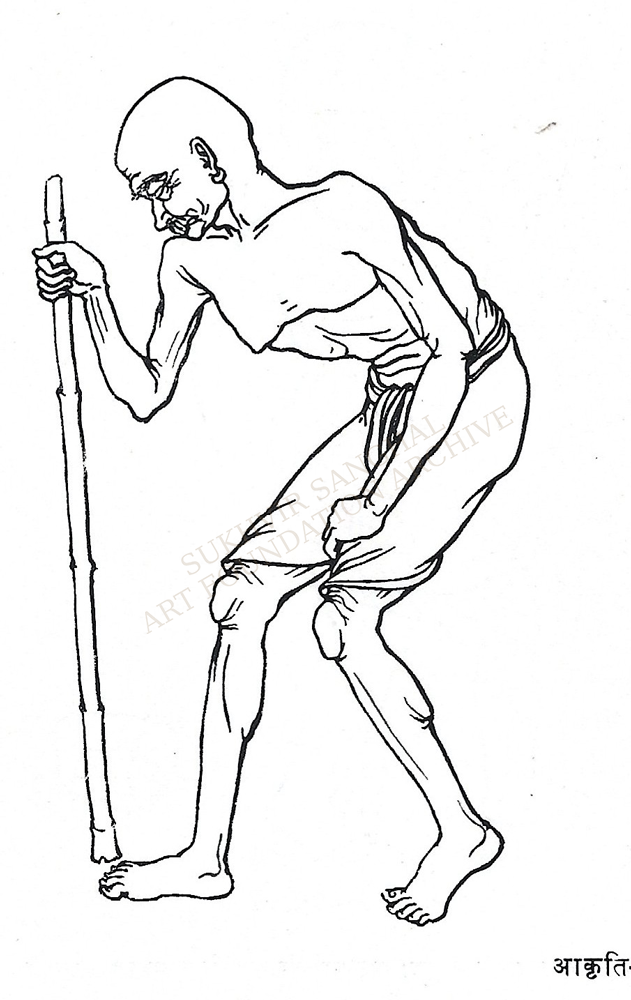
The Human Figure
The human figure is central to many of Sanghal's compositions. Yet his figures are not treated simply as exercises in anatomical representation. Posture, gesture and interaction frequently become carriers of emotion.
His painting Marriage Procession, for instance, contains roughly 300 figures, an extraordinary feat of compositional and figurative execution. Despite the sheer number of figures, each one possesses its own gesture, posture, emotional character and relationship to the figures around it. Rather than functioning as a mass of repeated forms, the figures create a complex web of human interactions, each contributing to the larger emotional narrative of the scene.
Sanghal's ability to execute hundreds of figures within a single composition while maintaining individuality and purpose in each figure is a distinctive feature of his work. A lowered head, an extended arm, a turned body or the relationship between two figures can communicate psychological states without requiring elaborate narrative explanation.
The figure therefore becomes a vehicle for emotional expression, allowing bhava to be suggested and experienced through the painting.
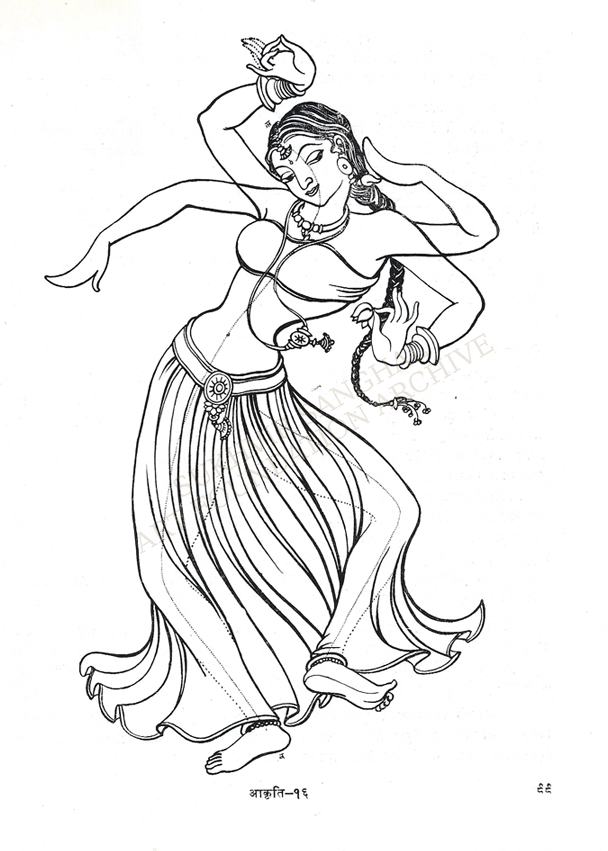
Painting in Series
Prof. Sukhvir Sanghal frequently explored ideas through series of paintings, allowing a theme to develop across multiple works rather than being confined to a single composition.
His major series include Marriage, River of Life, Phases of Life, Arjuna as Ideal Man, Ramcharit, Indian Life and Gandhi.
The series format enabled Sanghal to examine different moments, emotions and aspects of a subject while maintaining a larger conceptual unity. In works such as Phases of Life and River of Life, the progression of images becomes a visual reflection on time, human experience and transition.
His use of series therefore represents not simply a method of grouping paintings, but a way of deepening an artistic idea through multiple compositions.
"This is a pleasure to visit the Allahabad School of Arts. The art work displayed here is very good. Some of the studies, such as the serial study of Hindu Marriage and works depicting the problems facing Indian peasants and labourers, are very interesting. I have not seen such studies elsewhere. The fact that the institution has several branches in the city is a tribute to its popularity."
— Dr. Sampurnanand, Chief Minister of Uttar Pradesh
Longevity of Sanghal’s Wash Paintings
Prof. Sukhvir Sanghal evolved his own approach to the wash technique, with particular attention to the durability and longevity of the finished painting. He maintained that the technique and materials he developed resulted in paintings that were durable and long-lasting, allowing the works to retain their visual qualities over extended periods.
Teaching and Transmission
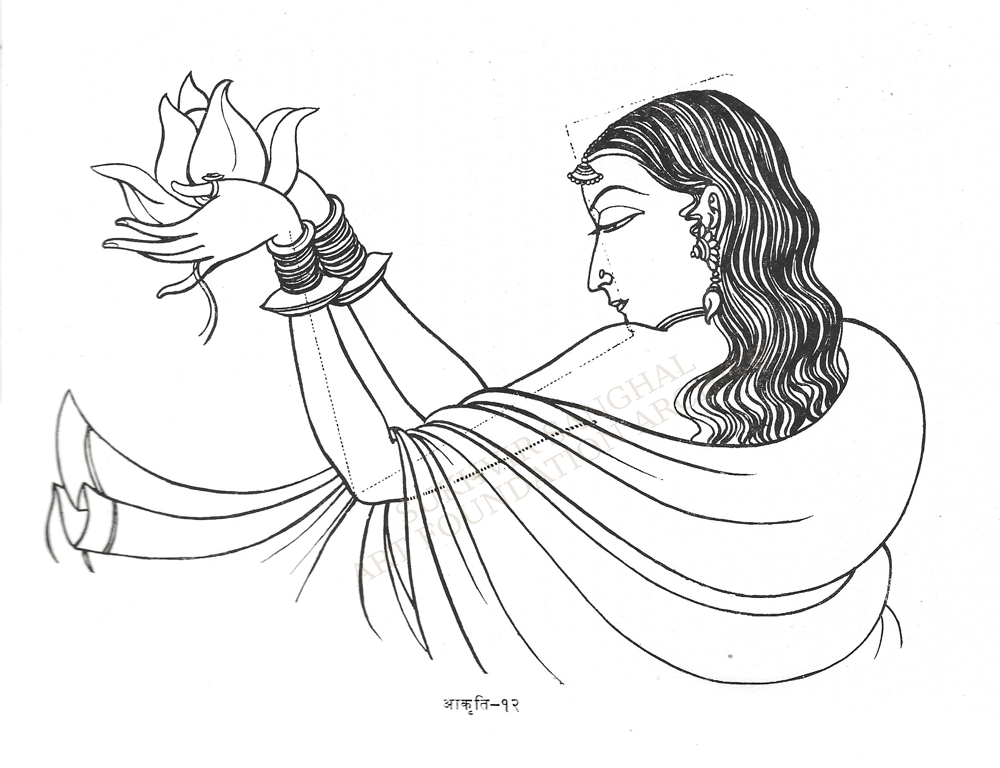
Sanghal's contribution extended beyond his own artistic practice.
He founded Kala Bharti in Allahabad in 1938 and later served at the Government School of Arts and Crafts, Lucknow, eventually becoming its Principal.
His role as an educator formed an important part of his artistic legacy. Through teaching, writing and institutional work, he sought to transmit an understanding of Indian art and artistic practice to future generations.
Research & Compilation